More than 20 commercial ships, including three Iran-linked ships and a Chinese tanker,
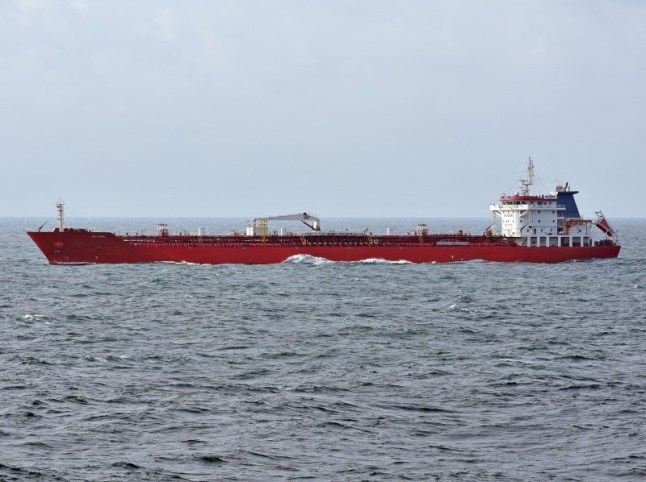
A Chinese tanker under US sanctions passed though the Strait of Hormuz,according to data
Donald Trump’s blockade of the Strait of Hormuz might not be as effective as he bullishly claimed with Iran linked ships passing straight through.
The US President had ordered the pinchpoint closed and sent 10,000 sailors,marines and dozens of warships to enforce it.
But shipping data shows more than 20 commercial ships,including three Iran-linked ships and a Chinese tanker,still passed through the Strait in the past 24 hours.
The three Iran-linked vessels that transited the strait were not heading to Iranian ports and were not affected by the blockade.
Two of the Iran-linked ships that went through the strait,the Christianna and Elpis,had previously been at Iranian ports,according to MarineTraffic data.
Any Iran-linked ship violating the blockade will be taken to holding areas in Arabian Sea ports, two US officials told the Wall Street Journal.
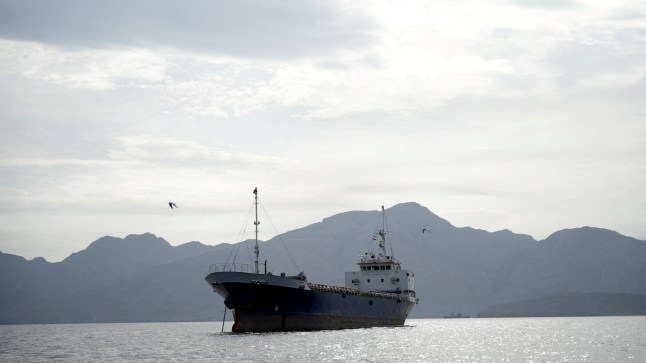 A vessel in the Strait of Hormuz,off the coast of Oman’s Musandam province (Picture: REUTERS)United Nations secretary-general Antonio Guterres agreed,saying it is ‘highly probable’ that talks will restart.The first round of talks ended without an agreement on Iran’s nuclear ambitions,which the White House says is a central sticking point.Meanwhile,in Washington,the first direct talks in decades between the Israeli and Lebanese ambassadors to the US concluded on an productive note,according to the US state department.
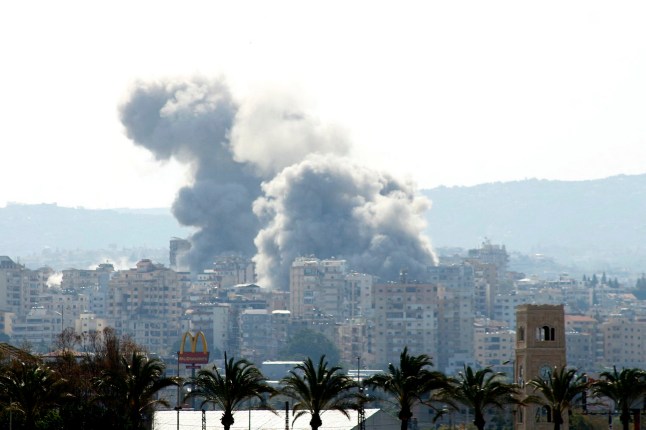 Smoke rises behind palm trees and a McDonald’s “Golden Arches” logo from the site of an Israeli airstrike in Lebanon (Picture: AFP or licensors)Israeli ambassador Yechiel Leiter said the two countries were ‘on the same side of the equation’ in ‘liberating Lebanon’ from the militant Hezbollah group.The war,now in its seventh week,has jolted markets and rattled the global economy as shipping has been cut off and air strikes have torn through military and civilian infrastructure across the region.The fighting has killed at least 3,000 people in Iran,more than 2,000 in Lebanon,23 in Israel and more than a dozen in Gulf Arab states. Thirteen US service members have also been killed.
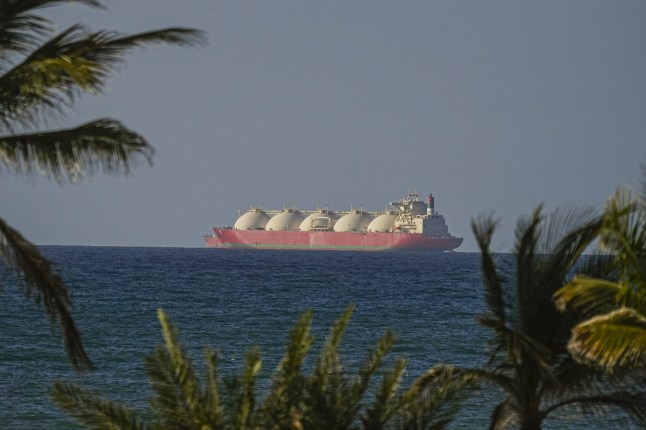 Two vessels passed safely before the Strait was apparently shut again (Picture: Getty)It depends on who you ask.Dr Bamo Nouri,senior lecturer in International Relations at the University of West London,told Metro that what’s happening with the Strait is contradictory,but both things are true at once.‘It is technically ‘open’ but not freely operating. The US presents it as open to reassure markets,while Iran is effectively controlling access – allowing passage,but under conditions,monitoring,and implicit threats against non-compliant vessels,’ he explained.‘That means shipping can move,but with heightened risk,reduced traffic,and rising costs. In practice,Iran doesn’t need to fully close the strait to exert leverage.